
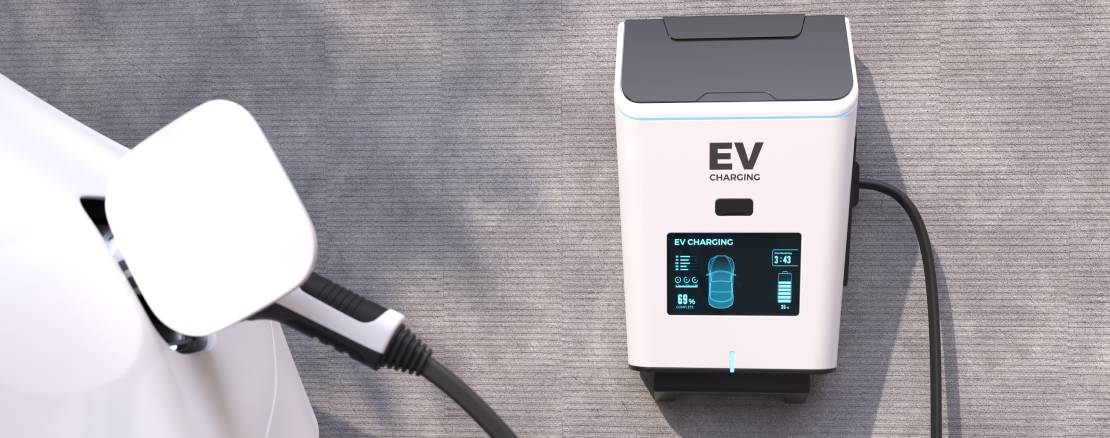

If you have just bought an electric car in Dubai, the single biggest upgrade to daily ownership is a charger on your own wall. EV charger installation Dubai for homeowners arranged today is governed by DEWA’s EV Charging Technical Regulations, must be done by a DEWA-enrolled contractor, and typically takes a few days from survey to testing.
Here is everything worth knowing before you sign a quote.
Quick Glance
- Home EV charging is cheaper than public DC fast charging in Dubai.
- DEWA compliance is mandatory, with installation through a DEWA-enrolled contractor.
- 7 kW or 11 kW suits most Dubai villas. 22 kW only makes sense with a compatible three-phase supply and a 22 kW-capable EV.
- Installation costs are around AED 2,000–9,000. It depends on the charger, cabling, and electrical work.
- Smart chargers offer useful features such as load balancing, scheduling, and energy tracking.
- Site surveys and proper testing are essential for safe, compliant installation in Dubai’s extreme heat.
Why Home EV Charger Installation Is Becoming Essential in Dubai in 2026
Dubai crossed roughly 48,000 registered electric vehicles by the end of 2025. The charging network grew to 2,223 charging points across the emirate by the end of Q1 2026. This is counting DEWA’s own stations and licensed operators.
Public infrastructure is expanding fast. It still cannot beat plugging in at home overnight.
The cost gap is the real argument. DEWA’s public EV tariff is AED 0.64 per kWh for AC charging and AED 1.14 per kWh for DC, before VAT. At home, you pay your normal residential slab rate of 23 to 38 fils per kWh plus a 6-fil fuel surcharge. That works out to roughly 29 to 44 fils per kWh.
Drive an average 1,500 km a month and a home EV charging station Dubai side saves you somewhere between AED 170 and AED 220 every month compared to DC fast charging. Most installations pay for themselves within two years.
That is why a residential EV charger Dubai setup has shifted from a luxury to a default. If you are weighing it against public charging, our breakdown of the DEWA Green Charger network versus private home chargers covers the trade-offs in detail.
What You Need to Know About DEWA Requirements for Home EV Chargers
DEWA EV charger installation rules are clearer than most people expect. Your home charger counts as private EVSE under DEWA’s framework, meaning equipment in a restricted-access area for your own use. You do not need a charge point operator license for that. Those licenses apply only to businesses selling charging to the public.
What DEWA does regulate is how the work is done. From the EV Charging Technical Regulations:
- Installation must follow the IET Code of Practice for Electric Vehicle Charging Equipment Installations and the IET Wiring Regulations (BS 7671)
- Electrical work must comply with section G.5 of the Dubai Building Code, which covers EV charge points
- The unit needs a Type 2 connector to IEC 62196-2 and must operate in Charging Mode 3
- Protection requires a 30 mA Class A residual current device and a four-pole isolator or MCCB
- Output is capped at 32 A per phase and 22 kVA per charge point
- To start the electrical connection process, you go through a DEWA-enrolled consultant or contractor
One rule: Charging Mode 1 and Mode 2 cables used with extension cords are restricted on safety grounds. The three-pin granny cable that came with your car is for emergencies, not nightly use.
Choosing an EV charger installer Dubai based on price alone usually means skipping one of these steps. Our guide to what ADQCC certification actually means explains how to read a compliance claim properly.
How to Choose the Right EV Charger for Your Dubai Home
Start with three questions, in this order.
- What does your car accept? Your vehicle’s onboard charger sets the ceiling. Plug a 7 kW car into a 22 kW unit, and you still get 7 kW. Most EVs sold in the UAE cap at 7 kW or 11 kW on AC. Only a handful take the full 22 kW.
- What does your property supply? Single-phase supply supports up to 7 kW. Anything faster needs three-phase. A site survey confirms this in minutes.
- Where will it live? Distance from your main distribution board drives the cable run, and cable is often the largest line item in an electric car charger installation Dubai quote.
The best EV charger for home Dubai conditions is almost never the most powerful one. It is the one matched to your car, your supply, and your parking spot. Our guide on choosing the right home EV charger in the UAE walks through the specs, and you can browse compliant units on our products page.
7 kW vs 22 kW EV Charger: Which One Is Better for a Villa?
For most villas, 7 kW or 11 kW is the right answer. Here is the honest comparison.
Component | 7 kW | 11 kW | 22 kW |
Supply needed | Single-phase, 32 A | Three-phase, 16 A | Three-phase, 32 A |
Range added per hour | ~35–40 km | ~55–60 km | ~100–120 km |
60 kWh battery, 20% to 100% | ~7 hours | ~4.5 hours | ~2.5 hours |
Cars that use full speed | Nearly all | Most newer EVs | Few (Taycan, e-tron GT, some Renault and Zeekr models) |
Typical installed cost | Lowest | Mid | Highest, plus possible supply upgrade |
Best for | One car, normal commuting | Larger batteries, two-car households | 22 kW-capable cars, high daily mileage |
A 22 kW EV charger for villa Dubai properties only earns its price when your car can actually accept 22 kW AC and your villa already has three-phase capacity. Otherwise, you are paying for headroom you cannot use.
Overnight is the thing to remember. You have 10 hours parked. A 7 kW unit refills roughly 350 to 400 km in that window, which is more than most people drive in a week here. For a deeper look at power levels, see our explainer on DC fast charging versus AC charging.
How Much Does EV Charger Installation Cost in Dubai?
EV charger installation cost Dubai generally land between AED 2,000 and AED 9,000 all in. The spread comes down to hardware tier, cable distance, and whether any supply work is needed.
Broad market ranges look like this:
- Charger unit: AED 1,200 to AED 5,000 depending on power rating and smart features
- Standard installation: AED 1,200 to AED 2,500, usually covering protection devices, isolator, and a short cable run
- Extra cabling: charged per meter beyond the included run, with underground routing costing more
- Supply or board upgrade: only if your survey flags it
Then there is running cost. At 250 kWh a month, home charging lands around AED 76 to AED 115, including VAT. The same energy at public DC rates would run close to AED 300.
A word of caution. Several sites currently advertise a large DEWA home charger subsidy for villa owners. We could not find that program on DEWA’s official EV pages or in its published tariff documents. Before you factor any rebate into your budget, confirm it directly with DEWA. Our complete guide to EV charger types, benefits and costs in Dubai breaks the numbers down further.
EV Charger Installation Process: From Site Survey to Testing
A compliant EV charging station installation Dubai job follows five steps.
- Site survey. An engineer checks your distribution board capacity, spare ways, earthing arrangement, and the cable route to your parking spot.
- Load assessment. Your existing household demand is measured against the new circuit so nothing gets overloaded.
- Fixed quote. Hardware, protection devices, cable length, and any civil work are itemized.
- Installation. Usually one to four hours for a straightforward villa job. A dedicated circuit, its own breaker, the RCD, and the isolator all go in.
- Testing and commissioning. Insulation resistance, earth continuity, RCD trip time, and a live charging session with your car.
Ask for your test results in writing. That document is what proves the work meets standard, and it matters if you ever sell the property or make an insurance claim. Our UAE EV charger setup guide covers what to check at handover.
Can You Install an EV Charger in a Dubai Villa Garage?
Yes, and a garage is usually the ideal spot. It shields the unit from direct sun, sand, and rain, which extends its life considerably.
Two things to sort out first. If you own an independent villa, you generally only need your installer to handle the electrical side. If you are in a master community managed by a developer or owners association, ask about a community NOC before booking the work. Some communities want to see the installation plan.
Renters have a third consideration: landlord permission and a wall-mounted unit you can potentially take with you. We covered that in what happens to your home EV charger when you move.
Outdoor and carport installations are entirely workable too. You can see options on our home EV chargers page.
Smart EV Chargers vs Basic Chargers: What Should Dubai Homeowners Choose?
A basic charger delivers power and nothing else. A smart charger adds Wi-Fi or app control, scheduling, energy tracking per session, load balancing, and user access control.
The features that genuinely pay off in Dubai:
- Scheduling: So you charge when your household draw is lowest and stay in a cheaper DEWA slab
- Load balancing: Which throttles the charger when your AC compressors and everything else spike together
- Session tracking: Useful if you share a villa or want to separate car energy from household energy
- OCPP support: Which keeps you free to switch management platforms later instead of being locked to one vendor
For most households, a smart unit is worth the modest premium, mainly for the load management. Our piece on what OCPP is and why it matters explains the interoperability point.
Why Professional EV Charger Installation Matters in Dubai’s Climate
DEWA’s technical regulations require EV supply equipment to run at full capacity in ambient temperatures up to 55°C and relative humidity up to 95%, with an IP54 and IK10 protection rating.
Those numbers are not decoration. A charger mounted in direct August sun will sit well above ambient air temperature. An undersized cable that would pass inspection in a cooler climate can derate badly here. Cheap enclosures let dust and humidity into terminals, and corrosion follows.
A qualified EV charger installer Dubai accounts for heat derating, sizes the cable for sustained load rather than peak, and places the unit where it is shaded. That is the difference between a charger that lasts eight years and one that fails in two summers.
Maintenance matters too. Our guides on EV charger maintenance in the UAE and warranty expectations for homeowners cover the annual checks worth doing.
Why Choose Evolve for EV Charger Installation in Dubai?
Evolve handles home EV charger installation Dubai projects end to end: site assessment, equipment selection, compliant installation, testing, and ongoing support.
What that means, practically, is that we survey before quoting, so the price you get is the price you pay. We install to the IET Code of Practice and DEWA’s technical requirements. We hand over test documentation. And we support the unit after commissioning through remote monitoring, repairs, and upgrades.
FAQs
Expect AED 2,000 to AED 9,000 total, covering the charger, protection devices, cabling, and labor. A standard 7 kW villa install sits at the lower end. Three-phase 22 kW setups with long cable runs sit at the upper end. Running cost is roughly 29 to 44 fils per kWh on DEWA's residential slab tariff plus fuel surcharge.
You do not apply for a charge point operator license for private home use. The installation itself must comply with DEWA's EV Charging Technical Regulations and the Dubai Building Code, and it must be carried out through a DEWA-enrolled contractor. Your installer handles the compliance and paperwork.
Only if your property has a three-phase supply. Also check that your car accepts 22 kW on AC, because most EVs cap at 7 kW or 11 kW and will not charge any faster on a 22 kW unit.
The one matched to your car's onboard charger and your property's supply. For most villas, that is a 7 kW or 11 kW Type 2 smart charger rated IP54 or better, with load balancing and scheduling.
Yes. We handle EV charging station installation Dubai projects for villas, townhouses, apartments, and commercial sites, from survey through commissioning and after-sales support.
The physical work usually takes one to four hours for a standard villa. Including the site survey, quote, and scheduling, most projects are completed within a few days to a week. Longer cable runs, underground routing, or supply upgrades add time.
Yes. DEWA's specifications require equipment rated for outdoor use at up to 55°C ambient and 95% humidity, with IP54 and IK10 protection. Shaded placement still helps, since direct summer sun can push a unit into thermal derating and shorten its service life.