
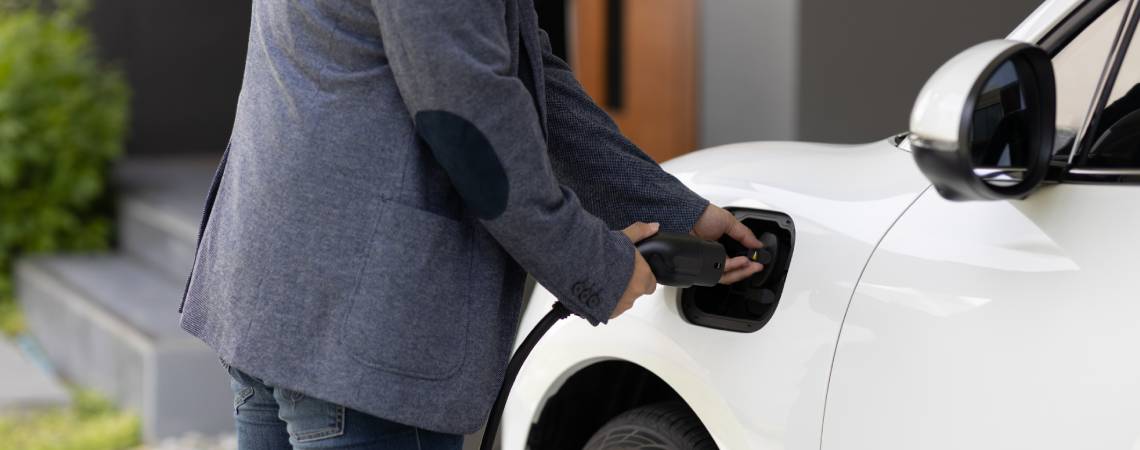

Dubai’s rental market moves fast, and EV owners relocating apartments or villas often assume their charger simply comes with them like any other appliance. Whether that’s true depends entirely on what kind of charger was installed in the first place.
Fixed wallbox vs portable charger – what’s actually movable
- Portable/plug-in chargers – designed to be unplugged and moved, similar to a large appliance. These can generally be taken to a new home with minimal fuss, provided the new location has compatible power infrastructure.
- Fixed wallbox chargers – hardwired into the property’s electrical system, mounted permanently. These require professional uninstallation and reinstallation – they’re not a simple unplug-and-go relocation.
Most home EV chargers installed for daily convenience are fixed wallbox units, since they offer faster, more reliable charging than portable alternatives – which means most relocations involve the more involved process, not the simple one.
What’s involved in uninstalling and reinstalling a wallbox charger
Uninstalling a fixed wallbox requires a qualified electrician to safely disconnect it from the property’s electrical circuit and remove the mounting hardware. Reinstalling at the new property means repeating much of the original installation process: assessing the new location’s electrical capacity, running new wiring if needed, and mounting and connecting the unit again. It’s effectively a new installation at the destination, using an existing charger rather than a new one.
Landlord/tenant considerations when a charger was installed under a rental agreement
If the charger was installed with landlord permission during a tenancy, ownership and removal rights should ideally have been addressed in the original agreement – but often weren’t, since EV charger installation is still a relatively new addition to standard tenancy considerations. Where this wasn’t documented, it’s worth having a direct conversation with the landlord before assuming you can remove it, since a fixed installation can be considered a property fixture depending on how it was installed and documented.
When it makes more financial sense to leave the charger and install new
Given the uninstallation and reinstallation labor cost involved, it sometimes makes more financial sense to leave a wallbox charger in place (potentially as a selling point for the next tenant or negotiated into the move-out terms) and install a new unit at the destination, rather than paying to move the same physical unit. This is particularly true for older units nearing the point where a newer, more efficient charger would be a reasonable upgrade anyway.
How Evolve handles relocation/reinstallation requests
Evolve manages both sides of a charger relocation – safe uninstallation at the current property and full reinstallation at the new one, including a fresh electrical assessment at the destination since power capacity and layout are rarely identical between properties. If you’re planning a move and want to know your options before committing either way, see our apartment EV charger installation guide, or reach out through our residential services page.
Related Reading
Article | Link |
EV Charger Safety Standards in the UAE | |
DEWA Green Charger Network vs Private EV Chargers | |
EV Charger Warranty and Maintenance | |
Solar-Powered EV Charging at Home |
FAQs
Portable chargers can generally move with you; fixed wallbox chargers require professional uninstallation and reinstallation rather than a simple unplug-and-relocate.
Yes, reinstalling a fixed wallbox charger requires a qualified electrician to assess the new property’s electrical capacity and complete a proper installation, similar to an original installation.
It depends on how the installation was documented in the tenancy agreement; a fixed installation can be treated as a property fixture in some cases, which is why this is worth clarifying with the landlord directly if it wasn’t addressed upfront.