
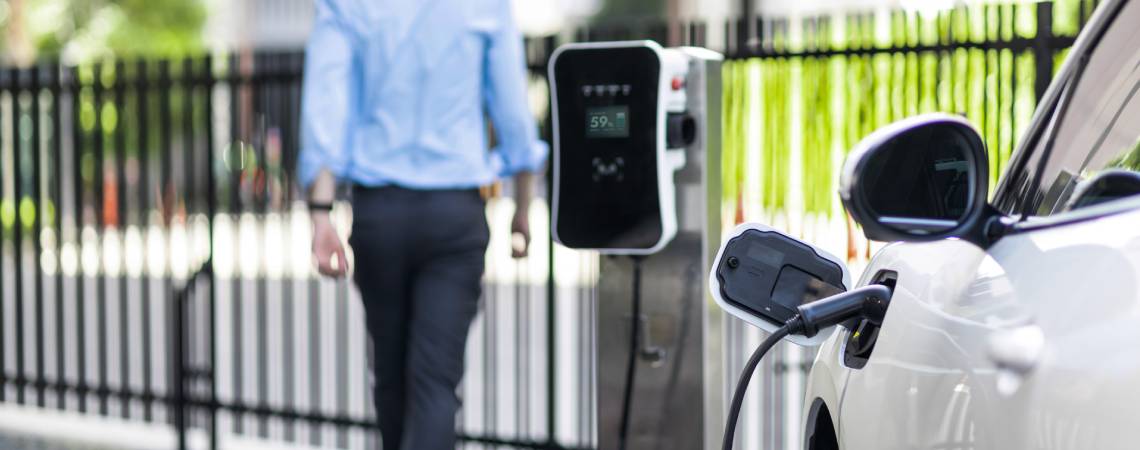

Dubai’s public charging network has grown fast, and it’s easy to assume it’s now enough on its own. For occasional drivers, it might be. For anyone driving an EV daily, relying on public charging alone usually turns into more friction than it looks like from the outside.
How DEWA’s Green Charger network works (locations, app, pricing)
DEWA’s Green Charger network consists of public charging stations distributed across Dubai, accessible through the DEWA smart charging app, which handles station location, session start/stop, and payment. Pricing is typically structured per kWh consumed, with rates set by DEWA and accessible through the app before starting a session. Coverage spans malls, public parking areas, and various commercial locations across the city.
Where DEWA charging still falls short for daily drivers (availability, wait times)
- Station availability fluctuates – popular locations can have chargers occupied or out of service, especially during peak hours
- No guaranteed access – unlike a home charger, you can’t count on a specific station being free when you need it
- Time cost – driving to a station, waiting for availability, and charging there takes meaningfully longer out of your day than plugging in overnight at home
- Charging speed varies by station type, which isn’t always predictable in advance
None of this makes public charging bad – it makes it a supplement rather than a dependable daily-use solution on its own.
Why a private home charger complements rather than replaces public charging
A home charger handles the predictable, everyday charging need – plug in overnight, wake up to a full battery, no detour required. Public charging then becomes genuinely useful for its actual strength: topping up during a longer trip, or covering the rare day you need extra range beyond a normal commute. Framed this way, home and public charging aren’t competing options – they solve different problems.
Cost comparison over a year of typical use
| Home charging | Public (DEWA Green Charger) |
Per-session cost | Generally lower, tied to standard electricity tariff | Generally higher per kWh than home electricity rates |
Time cost | Minimal – overnight, no dedicated trip | Adds travel and wait time to your day |
Convenience | High – charges while you’re not using the car anyway | Lower – requires planning around availability |
Best for | Daily driving, predictable routines | Occasional top-ups, travel beyond normal range |
Over a full year of daily driving, the combination of lower per-kWh cost and zero added time makes home charging the more efficient default for most owners, with public charging used situationally.
When Evolve recommends home + occasional public vs home-only setups
For most daily commuters, a home charger covers the vast majority of charging needs, with public charging used only occasionally for longer trips. A home-only setup (skipping regular public charging reliance) works well for drivers whose daily range needs stay comfortably within a full home charge. Evolve typically recommends assessing your actual daily driving pattern before assuming you need to rely heavily on public infrastructure at all. See our home EV charger installation cost guide for what a home setup involves, or explore our residential charger page to get started.
Related Reading
Article | Link |
EV Charger Safety Standards in the UAE | |
EV Charger Warranty and Maintenance | |
Can I Take My Home EV Charger With Me When I Move? What Renters and Movers Need to Know | |
Solar-Powered EV Charging at Home |
FAQs
No, DEWA Green Charger sessions are charged per kWh consumed through the DEWA smart charging app, at rates set by DEWA rather than being a free public service.
The DEWA smart charging app shows nearby station locations along with real-time availability, allowing you to check and reserve access before heading there.
It’s possible but generally less convenient and more time-consuming than home charging, due to variable station availability and the added time cost of dedicated charging trips.