
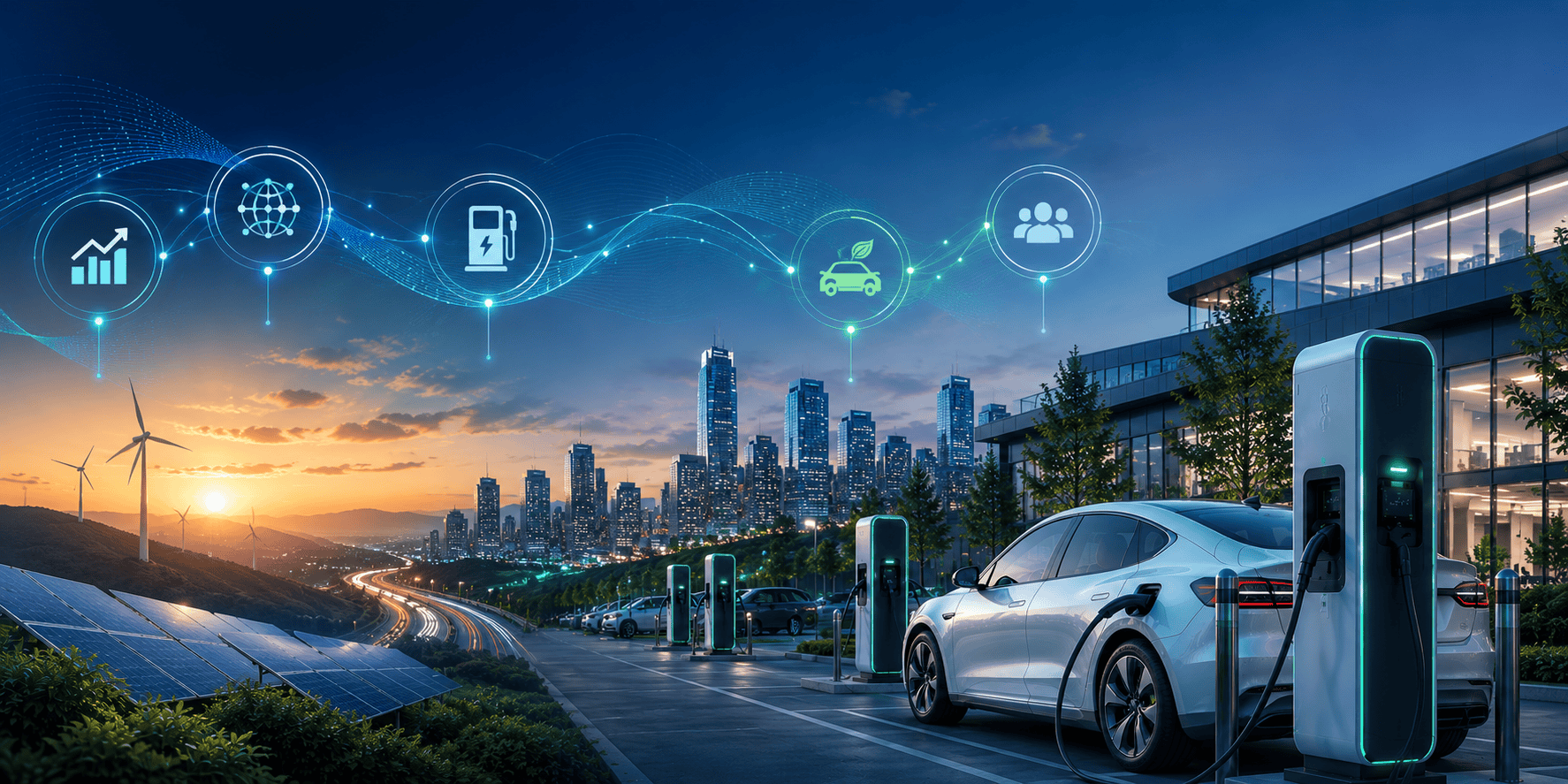

Electric vehicles have developed into a mainstream technology which organizations throughout the world, including governments and energy providers and automakers, are developing charging networks to support the increasing number of electric vehicles that operate on roads today. The technology that supports these networks experiences rapid evolution as more people start using the system.
The EV charging trends which will occur in 2026 show an industry movement towards developing charging systems with increased speed and advanced energy management capabilities which enable better integration between electric vehicles and electrical grid systems. The United Arab Emirates and other countries work to build national systems which will enable people to use eco-friendly transportation methods.
People who use charging networks to power their vehicles need to understand these changes because they affect their daily lives which policymakers and businesses need to address. The future of EV chargers is expected to become increasingly intelligent and faster and more networked than any previous time period.
The Rapid Growth of EV Infrastructure Worldwide
The entire electric vehicle industry is experiencing its most significant transformation through the current growth of charging station networks. The demand for electric vehicle charging infrastructure has increased because both government and private sector organizations are constructing extensive networks of public and private charging stations.
The world now witnesses charging networks that have advanced from basic plug-in stations to sophisticated energy systems which can handle extensive electricity distribution and simultaneous operation of multiple vehicles.
Several factors are driving the growth of EV infrastructure UAE and worldwide:
- Rising EV adoption rates
- Government sustainability initiatives
- Improvements in battery technology
- Increasing demand for convenient charging options
Electric vehicle setups go beyond just plugs in the wall. Fast-charging stations pop up more often now. Software helps track usage without much effort. Power from sun and wind ties into the system quite naturally.
Ultra-Fast Charging Technology
The development of ultra-fast charging technology marks the most important trend for electric vehicle charging in 2026. Current fast charging systems already show better performance than earlier charging technologies. The upcoming charger generation will enable users to obtain their required power needs through ultra-high power output capabilities which the system will provide.
Some of the latest systems can deliver more than 350 kW of charging power, allowing compatible vehicles to reach about 80% battery capacity in roughly 15–20 minutes. The enhancement develops into an essential component across both distance drivers and commercial vehicle operations. The implementation of faster charging systems decreases waiting periods, which enables people to use electric vehicles as their regular mode of transportation.
Smart Charging and AI Energy Management
Another important development that shapes the future of electric vehicle chargers comes from the development of intelligent charging systems. As electric vehicle usage grows all around the world charging stations need to handle substantial electricity loads while they preserve the stability of electrical grids. Smart charging technology uses advanced software and artificial intelligence to optimize how power is distributed among vehicles. AI-powered systems analyze real-time data that includes electricity demand, charger availability, and grid capacity. The systems have the ability to change their charging power and their charging times in order to achieve lower energy expenses and higher operational performance.
Smart charging networks also enable features such as:
- Dynamic electricity pricing
- Load balancing across multiple chargers
- Remote charger monitoring
- Predictive maintenance
These technologies help charging networks operate more efficiently while supporting the continued expansion of EV infrastructure.
Integration With Renewable Energy
Modern charging stations now incorporate solar panel systems and battery storage facilities and microgrid networks into their design. Charging networks produce renewable energy which helps to decrease carbon emissions while providing cost savings during peak electricity demand times. The integration process will create a major impact on the development of local renewable energy systems which will be used to power electric vehicles. The combination of EV chargers develops both the future of EV charging and sustainable transportation systems.
Open Standards and Interoperability
The expansion of EV charging networks requires vehicle charging system compatibility to become more critical than before. The adoption of open communication standards such as the Open Charge Point Protocol (OCPP) plays a major role in shaping EV charging trends for 2026.
The standards enable different charger manufacturers to establish connections between their devices and software systems and electric vehicles. Drivers can charge their vehicles at multiple charging stations because interoperability enables seamless operation between different charging stations. The system permits network operators to implement system upgrades whenever new technological advancements become available.
The Expansion of EV Infrastructure in the UAE
The United Arab Emirates is actively investing in electric mobility as part of its sustainability initiatives. The government partners with energy providers to create sustainable charging infrastructure which becomes operational for drivers throughout the United Arab Emirates. The charging networks extend their coverage to urban areas and main roads and residential zones in order to accommodate the rising electric vehicle population. Dubai plans to install numerous ultra-fast charging stations which will enhance EV driver access and assist with taxi fleet electrification.
The EV Green Charger initiative establishes more charging stations which enables residents to adopt electric vehicles. The investments demonstrate how United Arab Emirates electric vehicle infrastructure develops to enable environmentally friendly public transportation in urban areas.
Charging-as-a-Service and New Business Models
The future development of electric vehicle chargers will receive its next major advancement from the new concept of Charging-as-a-Service. CaaS providers handle the installation and operation of charging equipment for their customers who pay through subscription or usage-based pricing.
The system enables organizations to establish electric vehicle charging stations on their premises because it requires no substantial initial financial commitment. CaaS solutions have gained popularity among fleet operators and commercial properties and retail businesses because they provide electric vehicle support with minimal impact on daily operations.
What the Future Holds for EV Charging
Over the next ten years, cars and energy systems are going to change how they talk to each other. Charging stations won’t just be plugs—they’ll get smarter, using AI, tapping into clean energy, and even sending electricity back and forth as needed. Charging will get quicker too. At some point, plugging in might feel as simple and fast as filling up a tank of gas.
But none of that happens without the right infrastructure. As more people drive electric vehicles, countries that invest early in strong charging networks will lead the way in shifting to greener transportation.
The United Arab Emirates (UAE) is experiencing a transportation revolution because electric vehicles (EVs) require increasingly advanced charging systems. Businesses and homeowners that invest early will be better prepared for the next phase of EV adoption.
Evolve operates as your partner to establish high-performance electric vehicle charging systems that achieve both scalability and enduring reliability. Our team creates personalized solutions that assist with the fast-paced development of the electric vehicle ecosystem.
Contact Evolve today to secure your property with smart electric vehicle charging systems that will withstand future developments.
FAQs
The major EV charging trends 2026 include ultra-fast charging technology, smart charging systems powered by artificial intelligence, these innovations work to create faster charging times and improved energy usage and better grid maintenance.
The UAE government is investing heavily in EV infrastructure through different programs which extend public charging stations and support green transportation methods and promote electric vehicle usage. The implementation of extensive ultra-fast charging networks together with national charging initiatives is driving the rapid growth of electric vehicle adoption.
The future of EV chargers may include wireless charging, vehicle-to-grid energy systems, smart grid integration, and autonomous robotic charging solutions. The developed technologies enable electric vehicle charging through increased speed and operational simplicity and improved energy performance.